









Sep 18., 2024 / Business
Types of 3D Printers
Types of 3D Printers
In recent years, 3D printers have become one of the most important tools in various industries. These devices, using modern technology, enable the production of complex parts and objects that might be time-consuming or even impossible with traditional methods. From engineering and industrial design to medicine and art, the different types of 3D printers are revolutionizing the way products are manufactured and developed across many fields.
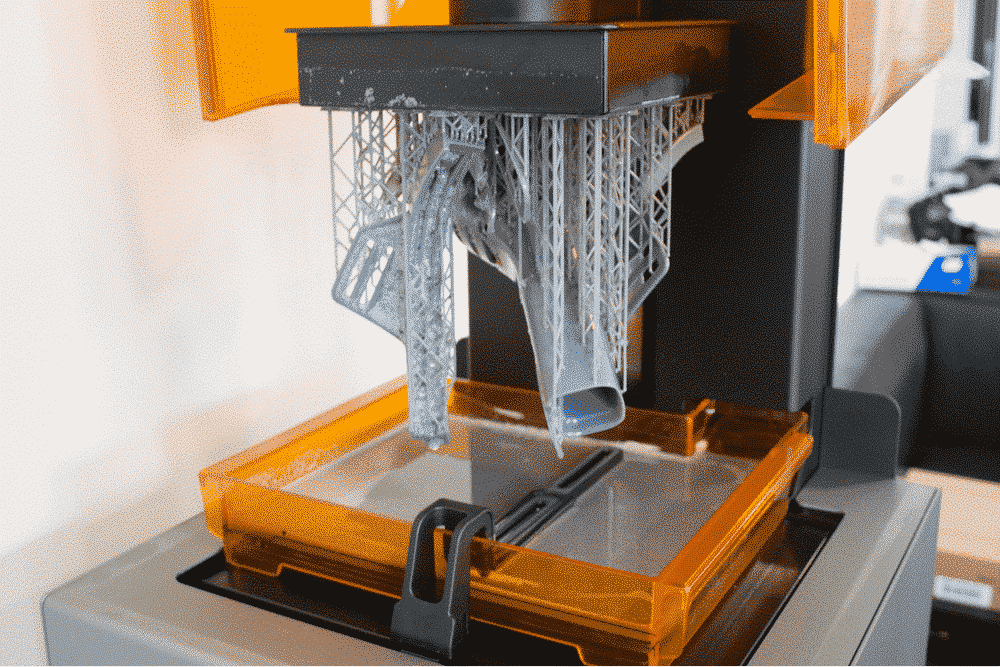
Understanding the differences between various types of 3D printers and their features will help you choose the best option for your industry needs. Each of these devices works with different techniques, each having its own unique advantages and characteristics. Therefore, selecting the right type can help improve the quality of the final product and reduce production costs.
| Type | Technology | Materials | Advantages | Disadvantages |
| Stereolithography (SLA) | Uses UV laser to cure liquid resin and convert it into solid plastic layer by layer. | Photopolymer resin | High accuracy, smooth surfaces, ideal for precise parts and prototypes. | Limited to photopolymer resins, parts can be brittle. |
| Digital Light Processing (DLP) | Similar to SLA but uses a digital screen to flash each layer image across the platform. | Photopolymer resin | High speed, suitable for intricate details and complex geometries. | Limited to photopolymer resins, parts may warp during cooling. |
| Fused Deposition Modeling (FDM) | Builds parts layer by layer by melting and extruding thermoplastic filament. | Thermoplastic filaments (ABS, PLA, etc.) | Affordable, easy to use, wide range of materials, ideal for functional prototypes. | Lower resolution, parts may need post-processing. |
| Selective Laser Sintering (SLS) | Uses a laser to sinter powder materials, fusing them together to form a solid structure. | Thermoplastic powders (nylon, polyamide) | No support structures needed, strong parts, more design freedom. | Powder management can be messy, requires post-processing to remove excess powder. |
| Selective Laser Melting (SLM) | Uses a powerful laser to fully melt metal powder, forming a solid metal part. | Metal powders (stainless steel, titanium, etc.) | High-strength metal parts, excellent durability, suitable for final applications, complex designs. | High cost, extensive post-processing, size limitations. |
| Electron Beam Melting (EBM) | Uses high-energy electron beam to melt metal powder in a vacuum environment. | Metal powders (titanium, aluminum, etc.) | Produces high-strength, heat-resistant parts, suitable for large parts. | High cost, lower precision compared to SLM, requires vacuum environment. |
To learn more about the different types of 3D printers and how to choose the right one for your project, visit AFZASAZ .
Stereolithography (SLA) 3D Printers
Stereolithography (SLA) is one of the most advanced 3D printing processes that use resin. Due to its high precision, isotropic properties, and ability to produce waterproof prototypes and final parts, SLA has become highly popular. These printers can produce parts with advanced material properties, smooth surfaces, and intricate details. SLA is widely used in various industries, including engineering, product design, and manufacturing.
SLA printers use a light source to cure liquid resin and turn it into solid plastic. This process involves placing the light source under the resin tank and exposing sequential layers of resin to build 3D parts. Technologies such as laser stereolithography (SLA), digital light processing (DLP), and masked stereolithography (MSLA) have been developed based on the type of light source used.
Fused Deposition Modeling (FDM) 3D Printers
FDM technology is one of the most common and appealing methods in 3D printing due to its speed in production. In this process, materials are added layer by layer, allowing the creation of complex parts with internal cavities. FDM is particularly suitable for office environments, as it uses high-quality, eco-friendly materials. These materials, usually thermoplastics, offer the durability and precision needed for various applications.
One of the key advantages of FDM is the reduction in production costs and faster time-to-market. This technology allows for quicker prototyping, giving businesses a competitive edge.
Conclusion
In conclusion, 3D printers are essential tools for modern industries, ranging from prototyping to final part production. Choosing the right 3D printer based on materials, required precision, and intended use can significantly impact the success of your projects. As technology advances, the applications of 3D printing are expected to expand even further, penetrating more aspects of daily life. Therefore, understanding the different types of 3D printers will enable you to make the best decision for your needs.

LEAVE A REPLY